
Is COPUOS at a Turning Point? What Space Governance Means for the New Space Era
A recent piece published in SpaceNews, co-authored by Expanding Frontiers Executive Director Dr. Fredrick Jenet alongside four colleagues, examines recent discussions within the United Nations Committee on the Peaceful Uses of Outer Space (COPUOS) and why they matter for the future of international space governance.
Read the full SpaceNews article here: Is COPUOS at a Turning Point? What Space Governance Means for the New Space Era
What is COPUOS?
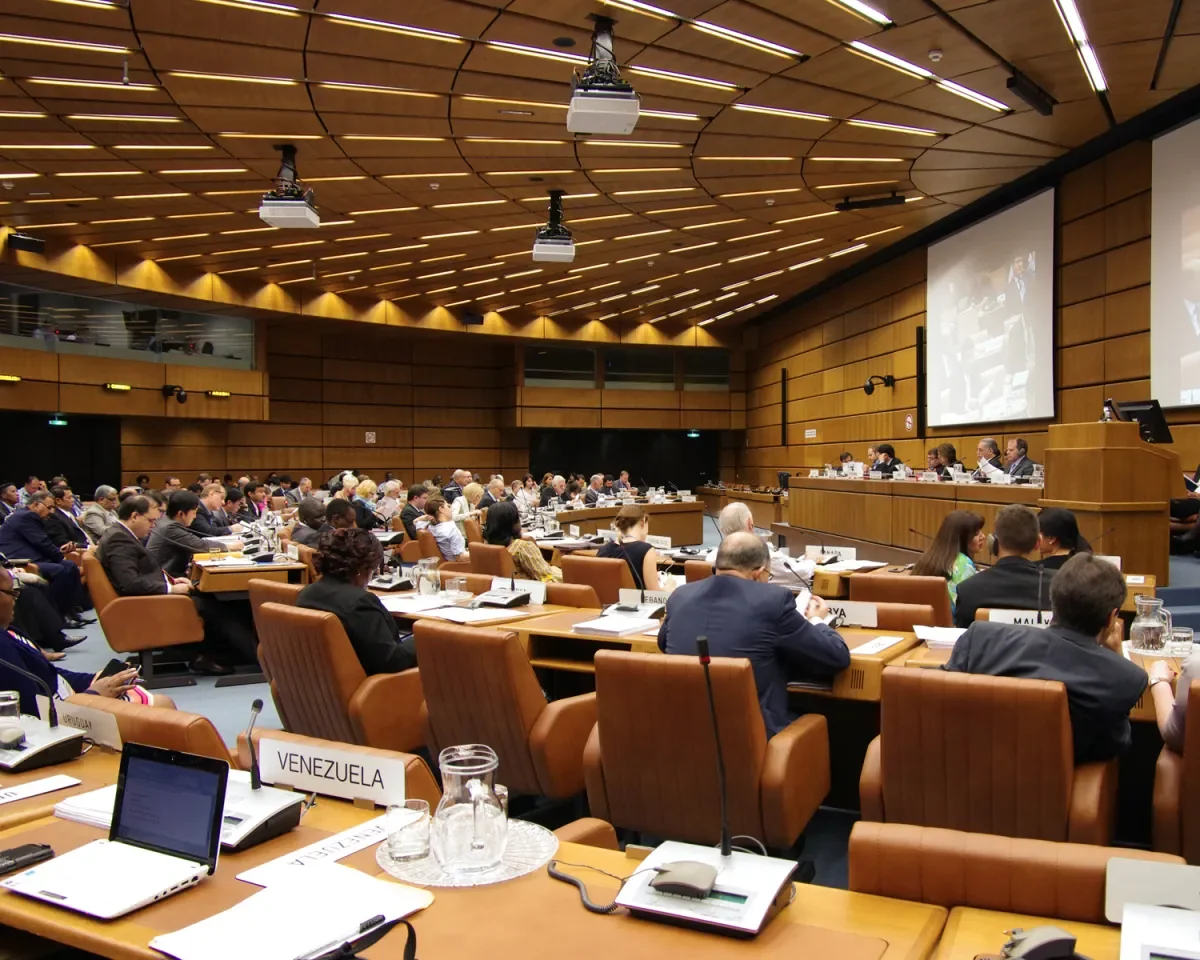
COPUOS was set up by the United Nations General Assembly in 1959 to govern the exploration and use of space for the benefit of all humanity, for peace, security, and development. The Committee has two subsidiary bodies: the Scientific and Technical Subcommittee and the Legal Subcommittee, both established in 1961. Starting with 24 members, it has since grown to 104 member states, making it one of the largest committees in the United Nations. The Committee meets annually in Vienna, Austria, to discuss questions relating to current and future activities in space, and is serviced by the United Nations Office for Outer Space Affairs (UNOOSA).

A Forum Built for a Different Era
The space industry of 2026 bears little resemblance to the one COPUOS was designed to oversee. Commercial actors are now driving innovation at a pace that government programs alone never could. Satellite constellations in low Earth orbit are expanding rapidly. Sustained lunar activity is being planned by multiple nations and private companies. Orbital congestion is becoming a genuine operational concern rather than a distant risk.
The SpaceNews article points out that this transformation represents a real success story for COPUOS in one sense: the body helped build the international norms and cooperative frameworks that made broader participation in space possible. More countries and more commercial actors are involved in space than ever before, and that growth reflects decades of multilateral dialogue. But that same growth is now placing new pressure on the institution itself.
The Strain Showing at STSC 2026
The article focuses on a specific moment that brought these tensions into focus. At the 2026 session of the Scientific and Technical Subcommittee (STSC), the consensus process that COPUOS relies on came under strain when longstanding language in procedural discussions was contested. The session ended without a full consensus report, something that signals institutional pressure even if the substantive work of the committee continued.
The piece draws an important distinction: COPUOS remains highly relevant in the issues it addresses, but the institution itself may need to adapt in order to remain fully effective. The challenges it faces, including space traffic coordination, the management of large satellite constellations, lunar operations, and radio frequency interference, are exactly the kinds of problems that cannot be solved by any single nation acting alone. They require exactly the kind of global dialogue that COPUOS was created to provide.
Why This Matters Beyond Policy Circles
It would be easy to dismiss this as a conversation confined to diplomats and lawyers in Vienna. But the decisions made in forums like COPUOS have real consequences for the commercial space industry, including the entrepreneurs, startups, and innovators building the next generation of space technology right now.
How orbital traffic is managed affects the viability of satellite based services. How lunar resource activity is governed will shape who can participate in that economy and under what conditions. How the international community handles the rapid expansion of commercial infrastructure in orbit will determine whether that expansion remains sustainable or creates cascading problems for everyone operating in space.
As the SpaceNews article puts it, there is simply no other forum in the world like COPUOS. Whether it evolves to meet this moment or struggles to keep pace, the conversation happening there matters to everyone with a stake in the future of space.
For Expanding Frontiers, participation in conversations like these reflects our broader mission: connecting communities, innovators, and future leaders to the opportunities emerging in the next era of space development. We believe the future of space will be shaped not only by technology, but also by thoughtful collaboration, international engagement, and inclusive pathways for participation.
We are proud to see our leadership contributing to these global discussions and helping bring greater public attention to the importance of space governance."
